Dynamic vs Static QR Codes: Which One Should Your Business Use?
Understanding the key differences between dynamic and static QR codes can save your business thousands in reprinting costs while unlocking powerful analytics and flexibility.
Choosing between dynamic and static QR codes is one of the most important decisions you'll make when implementing QR technology in your business. This choice affects everything from your marketing flexibility to your long-term costs and analytics capabilities.
What Are Static QR Codes?
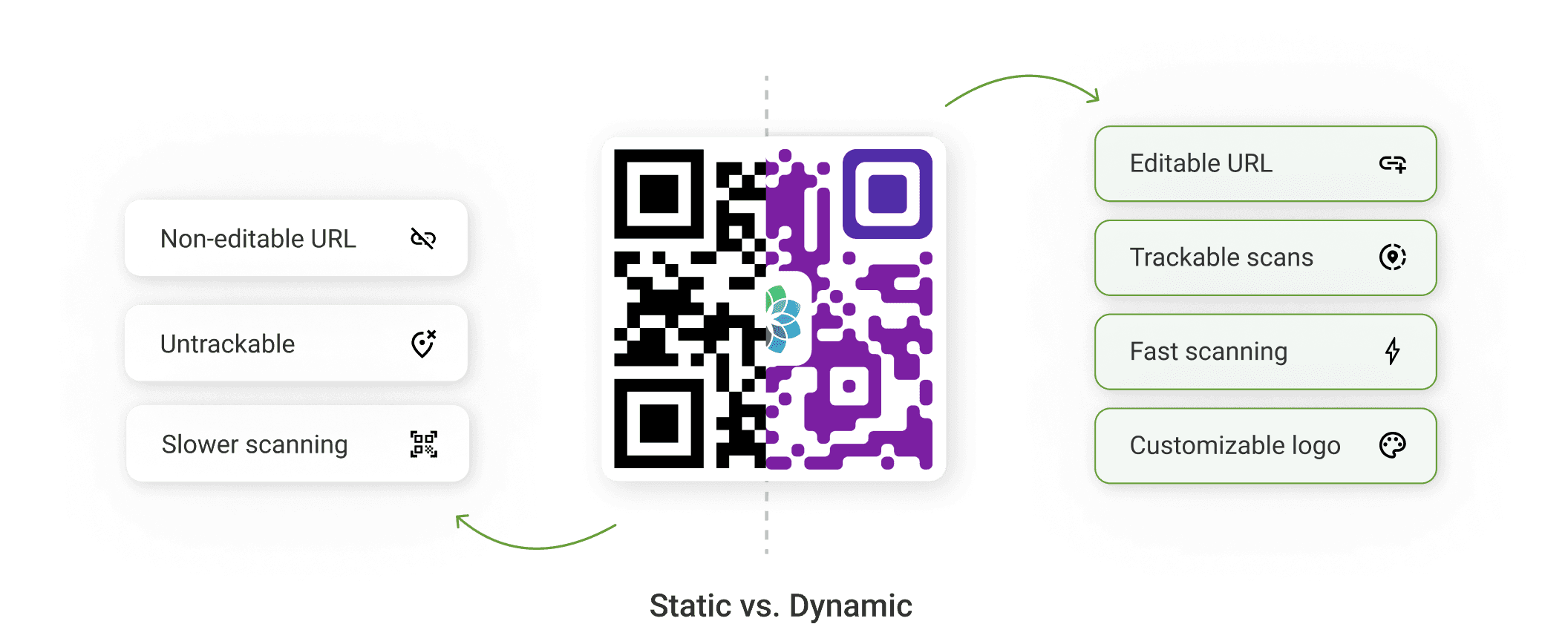
Static QR codes contain fixed information that cannot be changed once generated. The data is permanently encoded into the code's pattern, making it impossible to update the destination or content without creating an entirely new code.
When Static QR Codes Make Sense
Business Cards and Permanent Information Static codes work perfectly for information that never changes:
Contact details (vCard)
WiFi network credentials
Fixed company information
Permanent website URLs
Short-Term Campaigns For brief campaigns where you won't need to update content:
Event check-ins
Single-use promotional codes
Conference materials with fixed schedules
Simple Sharing Basic information sharing where analytics aren't needed:
Social media profiles
App store download links
Basic text information
Advantages of Static QR Codes
Free to generate - No subscription costs
Work forever - No risk of expiration
Simple - No account management needed
Privacy-friendly - No tracking by third parties
Fast scanning - Direct connection, no redirects
Limitations of Static QR Codes
No editing capability - Mistakes require reprinting everything
No analytics - Cannot track scans or user behavior
Dynamic QR codes contain a short URL that redirects to your actual destination. This allows you to change the target URL anytime without modifying the physical code.
The Power of Dynamic QR Codes
Campaign Flexibility A restaurant can print QR codes on permanent table tents but update them to show:
Breakfast menu in the morning
Lunch specials at midday
Dinner options in the evening
Weekend brunch menus on weekends
Cost Savings Example A retail chain printed 10,000 product catalogs with QR codes. When they needed to update pricing:
Static codes: $15,000 reprint cost + disposal of old materials
Dynamic codes: 30 seconds to update online, $0 additional cost
Advanced Dynamic QR Features
Smart Redirects
Device detection: Send iPhone users to App Store, Android users to Google Play
Location-based: Show different content based on geographic location
Time-based: Display relevant content for current time/date
Language detection: Automatic content localization
A/B Testing Capabilities
Test different landing pages with the same physical code
Optimize conversion rates without reprinting materials
Monthly subscription: $10-50+ depending on features and volume
Updates: Instant, no additional cost
Analytics: Built-in comprehensive tracking
ROI: Often pays for itself with first avoided reprint
Break-Even Calculation
If your dynamic QR code service costs $20/month and you avoid one $500 reprint job, you break even after 25 months. Most businesses see ROI within 3-6 months.
Security and Privacy Considerations
Static QR Code Security
Transparent: Destination is encoded in the code itself
No tracking: Direct connection to destination
Immutable: Cannot be changed maliciously after creation
Privacy-friendly: No third-party data collection
Dynamic QR Code Security
Requires trust: Must trust the QR service provider
Potential for change: URLs can be modified (feature or vulnerability)
Data collection: Service providers may collect scan data
Service dependency: Codes stop working if service shuts down
Choose reputable dynamic QR providers that offer:
SSL encryption for all connections
Clear privacy policies
Data ownership guarantees
Service level agreements (SLAs)
Making the Right Choice for Your Business
Choose Static QR Codes When:
Information never changes (contact details, WiFi passwords)
Privacy is paramount
You have no budget for QR services
Campaign duration is very short
You don't need analytics
Choose Dynamic QR Codes When:
Content needs regular updates
You want detailed analytics
Running long-term campaigns
Need A/B testing capabilities
Want smart redirect features
Budget allows for subscription costs
Hybrid Approaches
Many successful businesses use both types strategically:
Business cards: Static QR codes with permanent contact info
Marketing campaigns: Dynamic QR codes for flexibility and tracking
Product packaging: Dynamic for long-term customer engagement
Event materials: Static for fixed information, dynamic for updates
Implementation Best Practices
For Static QR Codes
Double-check everything before printing
Test on multiple devices to ensure compatibility
Use high-quality generation tools for better scanning reliability
Plan for permanence - choose destinations that won't change
For Dynamic QR Codes
Choose reliable providers with good uptime guarantees
Set up proper analytics from day one
Plan your redirect strategy before deployment
Regular monitoring to ensure codes are functioning properly
The Future-Proof Choice
While static QR codes will always have their place, dynamic QR codes offer the flexibility and insights that modern businesses need to stay competitive. The ability to adapt, optimize, and analyze makes dynamic codes the strategic choice for most commercial applications.
Consider starting with a few dynamic QR code campaigns to experience the benefits firsthand. Once you see the power of real-time updates and detailed analytics, you'll wonder how you ever managed campaigns without them.
The question isn't whether QR codes will be part of your future marketing mix – it's whether you'll choose the flexible, data-driven approach that dynamic codes provide, or limit yourself to the static world of unchangeable destinations.